
Sports training is a systematic and scientific process designed to improve an athlete’s overall performance and help them achieve peak results in competition. To make training effective and purposeful, it is guided by a set of well-defined principles. These principles act as a foundation for planning, organizing, and executing training programs in a structured manner. They ensure that athletes develop physically, mentally, and technically while minimizing the risk of injury and overtraining. From continuity and specificity to recovery and goal setting, each principle plays a crucial role in shaping a balanced and effective training routine for long-term success.
Principles of Sports Training are:
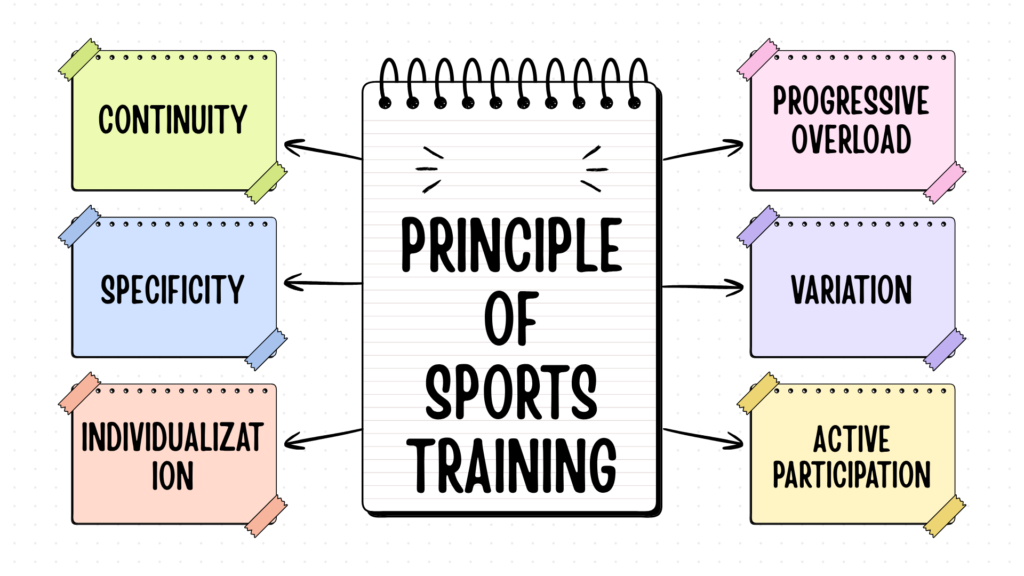
Principle of Continuity Training:
- The principle of continuity refers to the idea that consistent, regular training over an extended period of time is essential for sustained improvement in athletic performance.
- This principle emphasizes the need for continuous effort and practice, as interruptions or irregularities in training can hinder progress and may lead to a loss of physical conditioning, skills, and adaptations.
Principle of Specificity:
- Training should be directly related to the sport the athlete is preparing for.
- The principle of specificity underscores that exercises, drills, and routines must closely mimic the movements, energy systems, and skills required in the sport.
- By focusing on sport-specific tasks, athletes develop the physical and technical skills they need for optimal performance in competition.
- For instance, a sprinter will focus on explosive power and speed, while a swimmer concentrates on endurance and technique in the water.
Principle of Individualization:
- Every athlete is unique, and no two athletes will respond to training in exactly the same way.
- The principle of individualization emphasizes that training programs must be customized to fit the specific needs, abilities, and goals of each athlete.
- Factors like age, experience, fitness level, and even genetics should influence the design of a training regimen.
- This approach ensures that the athlete can develop optimally, without being overworked or under-challenged.
Principle of Progressive Overload:
- To improve, athletes must continually challenge their bodies.
- The principle of progressive overload involves gradually increasing the intensity, volume, or complexity of training to promote adaptation.
- Over time, this leads to improvements in strength, speed, endurance, and skill. The key is to push beyond current limits while allowing for proper recovery to avoid burnout or injury.
- Without progressive overload, the body becomes accustomed to the current level of training and progress stagnates.
Principle of Variation:
- Variation is essential for continued progress and to prevent both mental and physical stagnation.
- The principle of variation emphasizes that training programs should include diverse exercises and routines to challenge different aspects of performance.
- Changing up training keeps the athlete engaged, reduces the risk of overuse injuries, and promotes all-around athletic development.
- It also ensures that the body does not become too accustomed to specific exercises, which can result in plateaus.
Principle of Active Participation:
- This principle stresses the importance of the athlete’s involvement in their own training.
- Athletes need to be mentally engaged, self-motivated, and actively participate in their training to achieve optimal results.
- They should understand the purpose behind their training and take ownership of their progress.
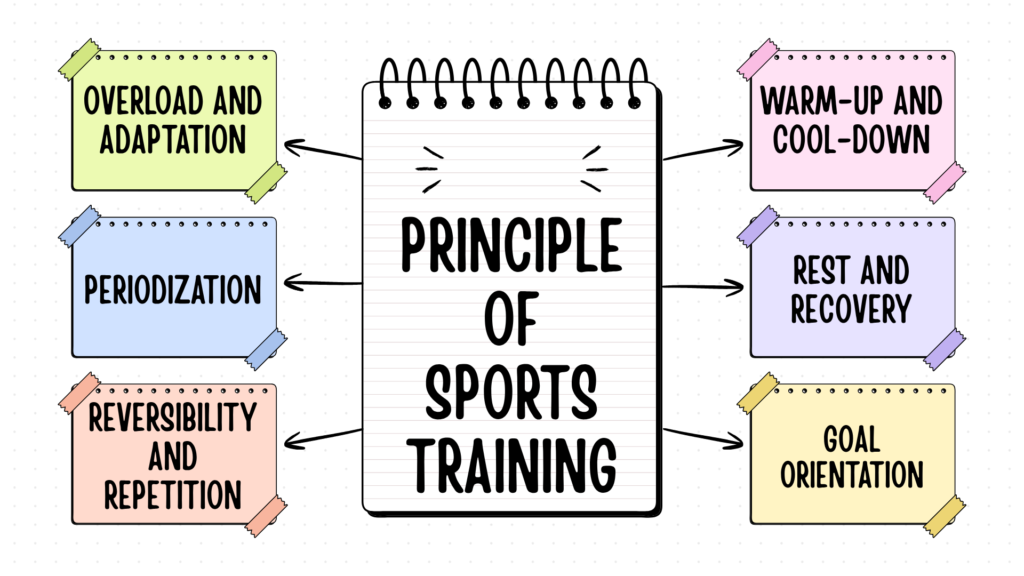
Principle of Overload and Adaptation:
- When the body is exposed to a level of stress beyond its current capacity, it adapts to handle that stress more effectively in the future.
- This principle of overload and adaptation is fundamental to improving performance. By gradually increasing the load, the body strengthens, builds endurance, and improves skill.
- However, the progression should be controlled to avoid injury or fatigue.
Principle of Periodization:
- The principle of periodization involves dividing the training program into distinct phases or cycles, each with its own focus.
- Periodization helps manage the training load over time, balancing periods of intense training with lighter, recovery-focused phases.
- The goal is to optimize performance and allow athletes to peak at the right time, such as before a major competition. By systematically planning training over weeks, months, or even years, periodization helps athletes reach their full potential while minimizing the risk of injury.
Principle of Reversibility and Repetition:
- The principle of reversibility refers to the concept that the physical and performance gains achieved through training are not permanent and can be lost if regular training is stopped or significantly reduced. Essentially, “use it or lose it.” When an athlete takes a prolonged break or reduces the intensity and frequency of their training, their fitness, strength, and skill levels will begin to decline.
- The principle of repetition focuses on the idea that frequent and repeated practice of specific movements or skills is crucial for skill development, muscle memory, and mastery in sports.
Principle of Warm-Up and Cool-Down:
- Effective sports training includes proper warm-ups before starting and cool-downs after training or competition.
- The principle of warming up helps prepare the body for physical exertion, reducing the risk of injury and improving performance.
- Cooling down helps the body return to a resting state and assists in recovery by reducing muscle stiffness and promoting flexibility.
Principle of Rest and Recovery:
- Rest and recovery are crucial components of sports training.
- The principle of recovery emphasizes that athletes need sufficient time to recuperate between training sessions to allow their bodies to repair, adapt, and strengthen.
- Inadequate recovery can lead to overtraining, burnout, or injury. Planned recovery periods, such as rest days or lighter training phases, are essential for long-term success.
Principle of Goal Orientation:
- Sports training should always be aligned with specific goals.
- The principle of goal orientation highlights that training must be purposeful, with clear short-term and long-term objectives guiding the process.
- These goals help focus training efforts and provide motivation for the athlete. Whether the goal is to improve a specific skill, build strength, or prepare for a competition, having a clear objective gives direction and meaning to each training session.
In conclusion, the principles of sports training provide a comprehensive framework for achieving optimal performance and sustained improvement. Each principle, whether it is progressive overload, individualization, or rest and recovery, contributes uniquely to the development of an athlete. When applied correctly and consistently, these principles help maintain balance between training stress and recovery, prevent performance plateaus, and reduce the chances of injury. Moreover, they ensure that training remains goal-oriented, engaging, and effective over time. Therefore, understanding and implementing these principles is essential for athletes, coaches, and trainers to maximize performance and reach their full potential.
You can also check video on the Principles of Sports Training on our youtube channel.