What is Coordination?
Coordination is the ability to make different parts of the body work together smoothly, accurately, and efficiently. It allows a person to perform movements with proper timing, balance, and control.
Whether you are catching a cricket ball, dribbling a basketball, dancing, or performing a gymnastics routine, coordination helps your body move in the right way at the right time.
Simply put, coordination connects the brain, muscles, and senses to produce smooth and controlled movements.
Why is Coordination Important in Sports?
Coordination plays a major role in every sport. Athletes with good coordination can perform skills more accurately and react faster during competition.
Benefits of Good Coordination
- Improves body control during movement.
- Increases balance and stability.
- Makes sports techniques more accurate.
- Enhances reaction speed.
- Helps perform complex movements smoothly.
- Reduces the risk of injuries.
- Improves confidence while playing.
Good coordination allows athletes to use less energy while achieving better performance.
Types of Coordination Abilities
Different sports require different coordination skills. The following are the major coordination abilities.
1. Adaptation Ability
Adaptation ability is the capacity to quickly adjust body movements when the playing situation changes.
For example, a football player suddenly changes direction to avoid a defender or a badminton player changes their position to return an unexpected shot.
Importance
- Helps respond quickly to changing situations.
- Improves decision-making during competition.
- Makes movement more flexible.
2. Balance Ability
Balance ability is the skill of maintaining body stability while standing, walking, running, or landing.
Balance can be static (without movement) or dynamic (while moving).
Examples
- Standing on one leg.
- Landing safely after a jump.
- Walking on a balance beam.
Importance
- Prevents falls.
- Improves body control.
- Increases movement efficiency.
3. Combinatory (Coupling) Ability
Combinatory ability means performing different body movements together in a smooth and coordinated manner.
Examples
- Running while throwing a ball.
- Dribbling and passing in basketball.
- Batting while moving the feet in cricket.
Importance
- Improves overall sports performance.
- Makes complex skills easier to perform.
- Enhances movement efficiency.
4. Kinesthetic Ability
Kinesthetic ability is the body’s awareness of movement and position without depending on vision.
Athletes can control their movements even without looking directly at the body part.
Examples
- A basketball player dribbles without looking at the ball.
- A gymnast performs a flip without watching their feet.
- A football player controls the ball while looking ahead.
Importance
- Improves body awareness.
- Increases movement precision.
- Enhances skill execution.
5. Rhythm Ability
Rhythm ability is the skill of performing movements with correct timing and flow.
Examples
- Dancing.
- Skipping rope.
- Gymnastics floor routines.
- Swimming strokes.
Importance
- Improves movement timing.
- Makes actions smooth and efficient.
- Helps maintain consistent performance.
6. Orientation Ability
Orientation ability is the capacity to recognize and control your body position in space.
Athletes must know where they are and how they should move during performance.
Examples
- A gymnast landing correctly after a flip.
- A football player moving into open space.
- A diver adjusting body position in the air.
Importance
- Improves spatial awareness.
- Enhances movement accuracy.
- Helps avoid collisions.
7. Differentiation Ability
Differentiation ability is the skill of adjusting force, speed, and movement according to the situation.
Athletes learn to apply the correct amount of power instead of using maximum force every time.
Examples
- Giving a gentle pass in football.
- Playing a soft drop shot in badminton.
- Dribbling a basketball with controlled force.
Importance
- Increases movement precision.
- Improves technical skills.
- Enhances game performance.
Methods to Develop Coordination
Coordination improves with regular and well-planned practice. Coaches use different methods to help athletes develop better control and movement skills.
1. Practice in Different Situations
Repeating the same skill under different conditions helps the body adapt quickly.
Example
Practice football passing on grass, sand, and uneven ground.
Benefits
- Improves adaptability.
- Develops confidence.
- Makes athletes ready for different playing conditions.
2. Use General and Sport-Specific Exercises
Both general fitness exercises and sport-specific drills help improve coordination.
General Exercises
- Skipping
- Rope jumping
- Balance drills
- Agility exercises
Sport-Specific Exercises
- Cricket batting practice
- Basketball dribbling
- Volleyball serving
- Football passing drills
3. Learn Correct Technique First
Athletes should first master the correct movement before trying to perform it faster.
Good technique creates better coordination and prevents mistakes.
Example
A tennis player first learns the proper serving action slowly before increasing speed.
4. Train the Sense Organs
Coordination depends on the eyes, ears, and balance organs.
Exercises that improve sensory response help improve overall coordination.
Examples
- Reaction drills using whistle signals.
- Light reaction exercises.
- Juggling for hand-eye coordination.
- Balance board training.
5. Add Variety to Practice
Repeating identical exercises every day can reduce improvement. Adding new challenges keeps the brain active and improves coordination.
Examples
- Use different-sized balls.
- Practice in different environments.
- Change movement speed.
- Try new drill combinations.
6. Increase Difficulty Gradually
Training should become more challenging step by step.
Example
- Dribble a basketball without obstacles.
- Dribble through cones.
- Dribble while a defender tries to stop you.
This gradual progression helps athletes improve safely and effectively.
Tips to Improve Coordination
- Practice regularly.
- Focus on movement quality rather than speed.
- Perform balance exercises.
- Include agility drills in training.
- Improve hand-eye and foot-eye coordination.
- Learn new movement patterns.
- Stay physically active every day.
Sports That Require Excellent Coordination
Many sports depend heavily on coordination, including:
- Cricket
- Football
- Basketball
- Volleyball
- Badminton
- Tennis
- Gymnastics
- Table Tennis
- Hockey
- Boxing
- Martial Arts
- Dance
Common Mistakes While Training Coordination
Avoid these mistakes during practice:
- Skipping warm-up exercises.
- Practicing only one type of movement.
- Ignoring proper technique.
- Increasing difficulty too quickly.
- Not giving enough recovery time.
- Losing concentration during drills.
Conclusion
Coordination is one of the most important components of sports training because it helps athletes move with accuracy, balance, control, and confidence. It improves the connection between the brain and muscles, making every movement smoother and more efficient. By practicing different drills, learning correct techniques, and gradually increasing training difficulty, athletes of all ages can develop excellent coordination and improve their overall sports performance.
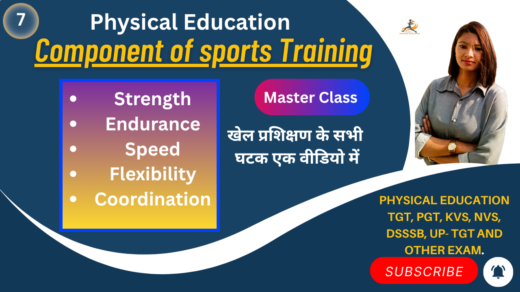
You can also check video Components of Sports Training on our youtube channel.