Methods of Endurance Training: A Complete Guide for Better Performance
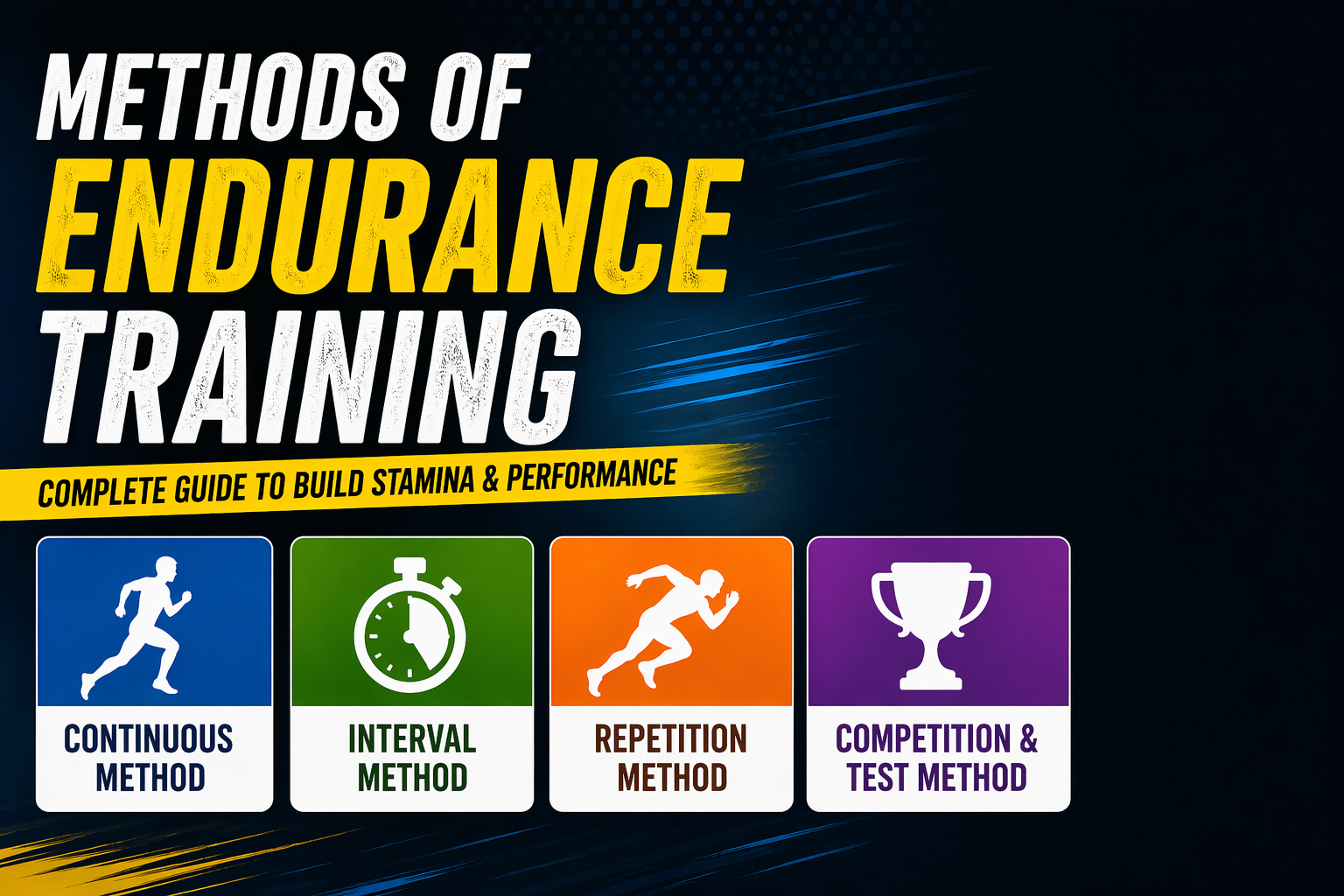
Endurance training is a fundamental part of sports performance, helping athletes sustain physical activity for longer periods without fatigue. It improves cardiovascular efficiency, muscular stamina, and overall fitness. Whether you’re a beginner or an advanced athlete, understanding different methods of endurance training can help you train smarter and achieve better results. This guide explains the major methods of endurance training in a clear and structured way.
1. Continuous Method
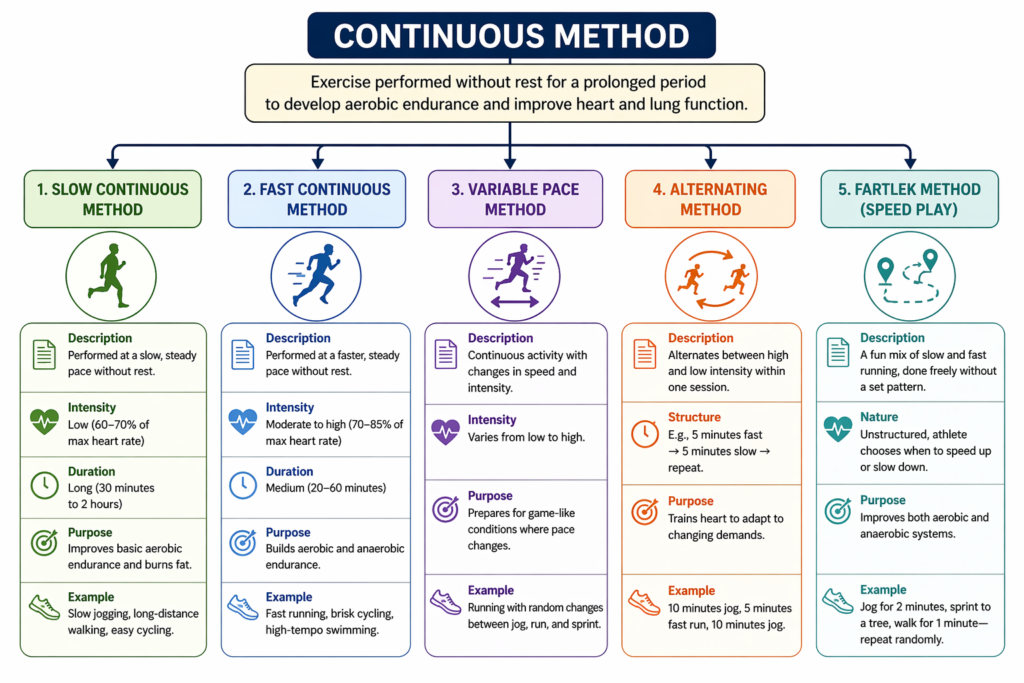
The continuous method involves performing exercise without rest for an extended period. It is one of the most commonly used training methods to develop aerobic endurance and improve heart and lung efficiency. Activities like running, cycling, and swimming are typical examples.
Types of Continuous Method
i. Slow Continuous Method
This method is performed at a slow and steady pace without any breaks. The intensity remains low, usually around 60–70% of maximum heart rate, and the duration is long, ranging from 30 minutes to even 2 hours.
Purpose:
It helps in building basic aerobic endurance and promotes fat burning.
Example:
Slow jogging, long-distance walking, or easy cycling.
ii. Fast Continuous Method
Unlike the slow method, this is performed at a faster pace with moderate to high intensity (70–85% of maximum heart rate). The duration is shorter, generally between 20 to 60 minutes.
Purpose:
It develops both aerobic and anaerobic endurance, making it suitable for athletes who need higher performance levels.
Example:
Fast running, brisk cycling, or high-tempo swimming.
iii. Variable Pace Method
This method involves continuous exercise with frequent changes in speed and intensity. The athlete shifts between slow, moderate, and fast paces within the same session.
Purpose:
It prepares the body for real-game situations where intensity constantly changes.
Example:
Running that alternates between jogging, running, and sprinting.
iv. Alternating Method
In this method, the athlete alternates between high and low intensity in a structured pattern during a single session.
Structure Example:
5 minutes fast running followed by 5 minutes slow jogging, repeated multiple times.
Purpose:
It trains the cardiovascular system to adapt quickly to varying demands.
v. Fartlek Method (Speed Play)
Fartlek, a Swedish term meaning “speed play,” is a flexible and unstructured training method. The athlete decides when to increase or decrease speed, making it more enjoyable and less monotonous.
Purpose:
It improves both aerobic and anaerobic systems while adding variety to training.
Example:
Jogging for a few minutes, sprinting to a landmark, then walking or slowing down randomly.
2. Interval Method
The interval method is based on alternating periods of high-intensity exercise and rest or recovery. It is highly effective for improving both aerobic and anaerobic endurance.
Key Feature:
The recovery period is incomplete, meaning the body does not fully recover before starting the next repetition. This helps in building endurance and tolerance to fatigue.
Example:
Running 400 meters at high intensity followed by 1 minute of rest, repeated several times.
Benefits:
- Improves cardiovascular efficiency
- Enhances speed and stamina
- Increases the body’s ability to recover quickly
3. Repetition Method
The repetition method involves performing high-intensity exercises with complete recovery between repetitions. Unlike interval training, the focus here is on quality rather than quantity.
Key Feature:
Full recovery allows the athlete to perform each repetition at maximum or near-maximum intensity.
Example:
3 sets of 800-meter sprints with 5-minute rest intervals.
Benefits:
- Develops speed endurance
- Improves muscular strength
- Enhances performance in high-intensity activities
This method is especially useful for advanced athletes aiming to improve performance in competitive sports.
4. Competition and Test Method
This method uses actual competitions or structured tests as a form of training. It not only builds endurance but also evaluates an athlete’s performance under real conditions.
Examples:
- Practice matches or races
- Fitness tests like the Cooper Test
Benefits:
- Simulates real-game pressure and environment
- Boosts motivation and confidence
- Helps in assessing progress and identifying weaknesses
This method is particularly useful during the later stages of training when athletes need to prepare for actual competition.
Conclusion
Endurance training is not a one-size-fits-all approach. Each method serves a specific purpose and contributes differently to an athlete’s development. The continuous method builds a strong aerobic base, while interval and repetition methods enhance speed, stamina, and recovery . The competition and test method, on the other hand, prepares athletes mentally and physically for real performance situations.
By combining these methods strategically, athletes can improve overall endurance, adapt to varying intensities, and achieve peak performance. The key is to choose the right method based on training goals, fitness level, and sport-specific demands.
You can also check video Components of Sports Training on our youtube channel.