Strength is a fundamental component of physical fitness that enables muscles to produce force for various movements. It plays a vital role in daily activities as well as sports performance, helping individuals lift, push, pull, and control their bodies effectively. Different methods of strength training are used to develop muscular ability in specific ways. These include isometric, isotonic, and isokinetic training, each focusing on improving strength through different types of muscle contractions and movement patterns. Understanding these methods helps in selecting the most effective training approach for fitness and performance goals.
Methods Of Strength Training
There are three Methods Of Strength Training. These are:
1. Isometric Strength Training
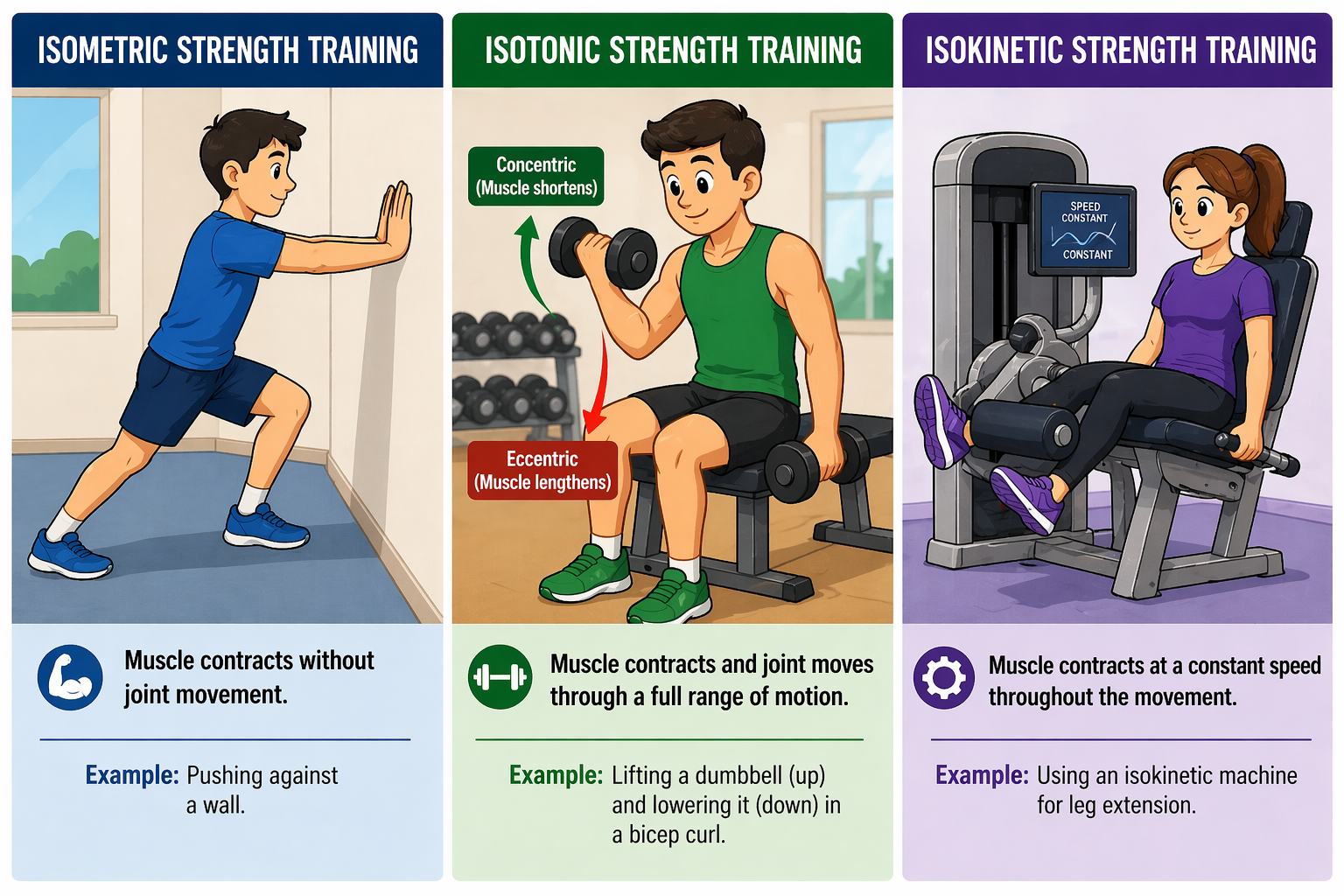
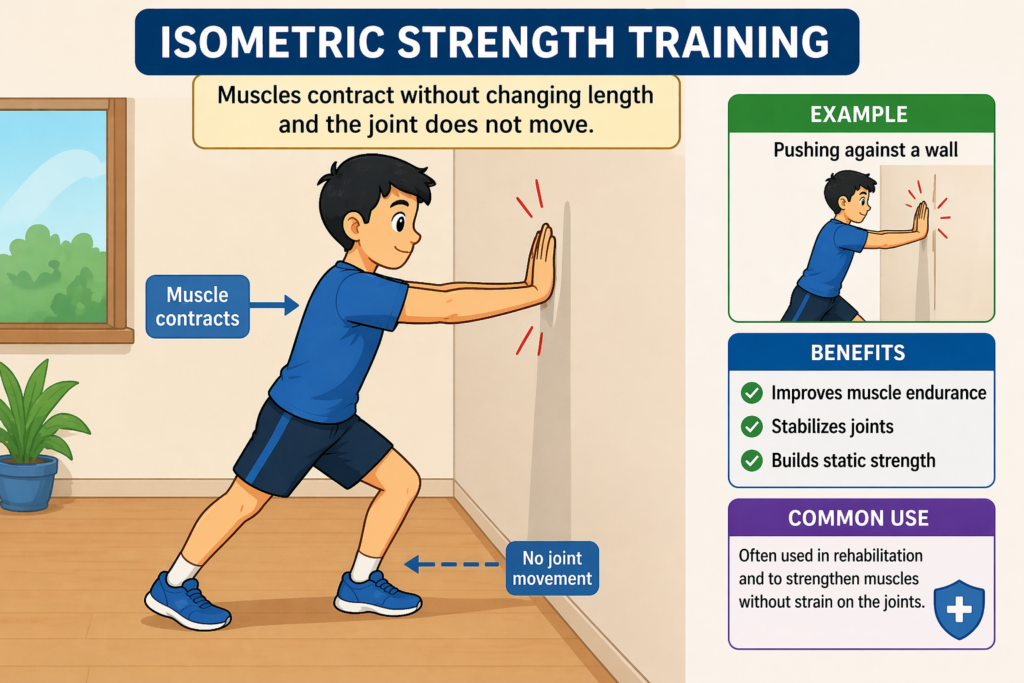
Isometric training involves contracting your muscles without moving the joint. In this type of training, the muscle works but doesn’t change length, and no visible movement occurs. It’s useful for building static strength and holding positions under resistance.
Example: Holding a plank position or pushing against a wall.
Benefits: Improves muscle endurance and stabilizes joints.
It is often used in rehabilitation and to strengthen muscles without strain on the joints.
2. Isotonic Strength Training
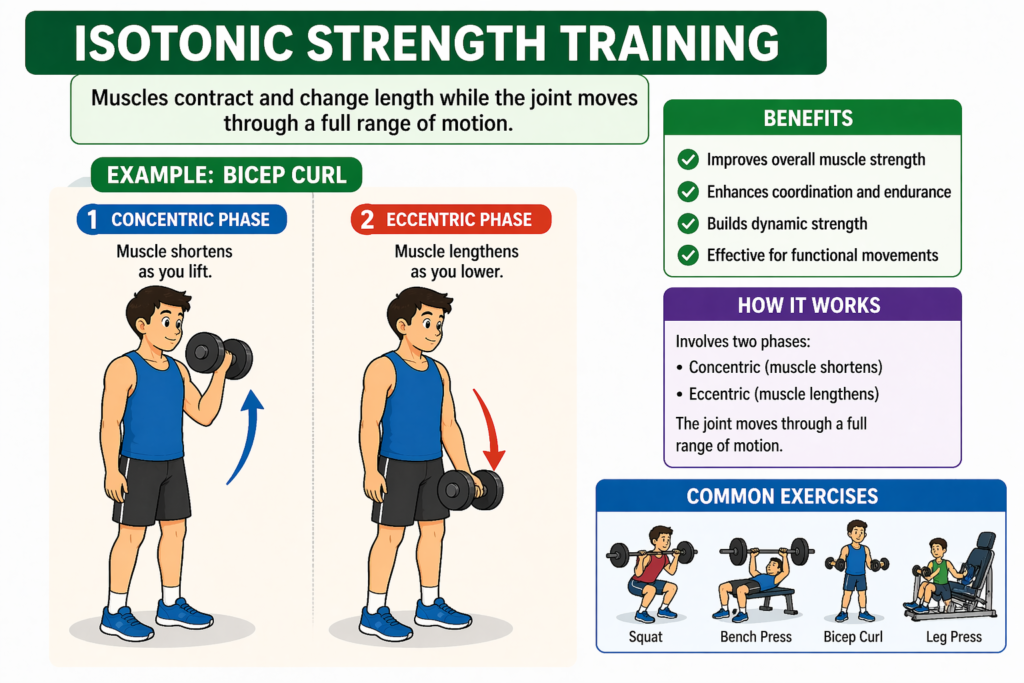
Isotonic training involves contracting your muscles while moving your joints through a full range of motion. This method has two phases: concentric (muscle shortens) and eccentric (muscle lengthens). It’s the most common type of strength training used in weightlifting.
Example: Lifting a dumbbell (concentric) and lowering it back down (eccentric) during a bicep curl.
Benefits: Improves overall muscle strength, coordination, and endurance. It’s effective for building dynamic strength and functional movements.
3. Isokinetic Strength Training
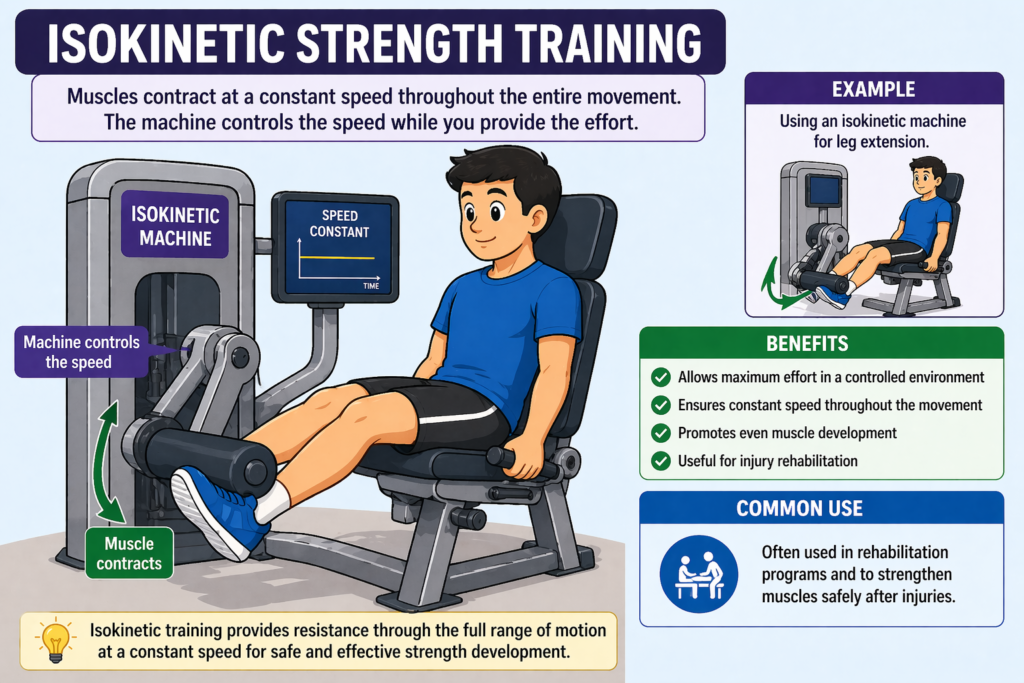
Isokinetic training involves contracting your muscles at a constant speed throughout the entire movement. Special machines, called isokinetic machines, control the speed of the movement while you provide the resistance. This method ensures that muscles work equally hard through the full range of motion.
Example: Using an isokinetic machine that controls the speed of a leg press or arm extension.
Benefits: Allows for maximum effort in a controlled environment, useful for injury rehabilitation and ensuring even muscle development.
Conclusion
In conclusion, strength training is essential for improving physical performance and overall fitness. Different methods such as isometric, isotonic, and isokinetic training help develop strength in unique ways based on muscle contraction and movement. Isometric training builds stability and endurance without movement, isotonic training enhances dynamic strength through full-range motion, and isokinetic training ensures controlled and balanced muscle development. Understanding these types allows individuals to choose suitable training methods according to their goals, whether for sports performance, general fitness, or rehabilitation, ultimately leading to better strength, efficiency, and injury prevention.
You can also check video Components of Sports Training on our youtube channel.